About WFSF

The global authority for futures studies

The World Futures Studies Federation is the global authority for futures studies. Founded in Paris in 1973, WFSF is an independent international federation of scholars, students, educators, practitioners and institutions committed to advancing the field worldwide.

WFSF strengthens the intellectual, educational and institutional foundations on which rigorous futures studies depends. Our mission is to advance futures-oriented thinking across fields of knowledge and action, encourage innovative, interdependent and critical inquiry across disciplines and cultures, and connect people and organisations concerned with futures.

Foresight Capability

In his 2026 webinar for the Federation, linked to his presentation at the last WFSF conference, Gabriele Rizzo argued that the futures-discipline is at a critical juncture. While interest in futures thinking is expanding, its intellectual foundations remain diffuse, with overlapping concepts often treated as competing rather than complementary domains. This fragmentation risks undermining both methodological rigour and the development of practitioners.

Drawing inspiration from the Langlands program in mathematics, he proposes a ‘language program for futures’. The analogy was deliberate: just as the Langlands program connects different mathematical languages through shared structures, a comparable framework in futures studies could map relationships across its various subfields without collapsing their distinctions.

Language is important: without shared definitions and conceptual clarity, the field risks incoherence and weak knowledge accumulation. Establishing common foundations would not standardise practice but rather strengthen the field’s ability to handle complexity and uncertainty. The goal is not to eliminate diversity of thought, but to create a stable platform from which futures studies can flourish more productively: balancing plurality with coherence as it seeks greater influence across policy, business and society.

As Jan Berger, President of the Federation comments “Foresight capability building means developing the individual and organisational ability to use futures systematically in present decision-making. It combines anticipation, futures literacy, futures studies and strategy to explore multiple futures, challenge assumptions and translate insight into action. The goal is not better prediction, but greater adaptability: building the capacity to navigate uncertainty, prevent strategic surprise and create new options as conditions change”.
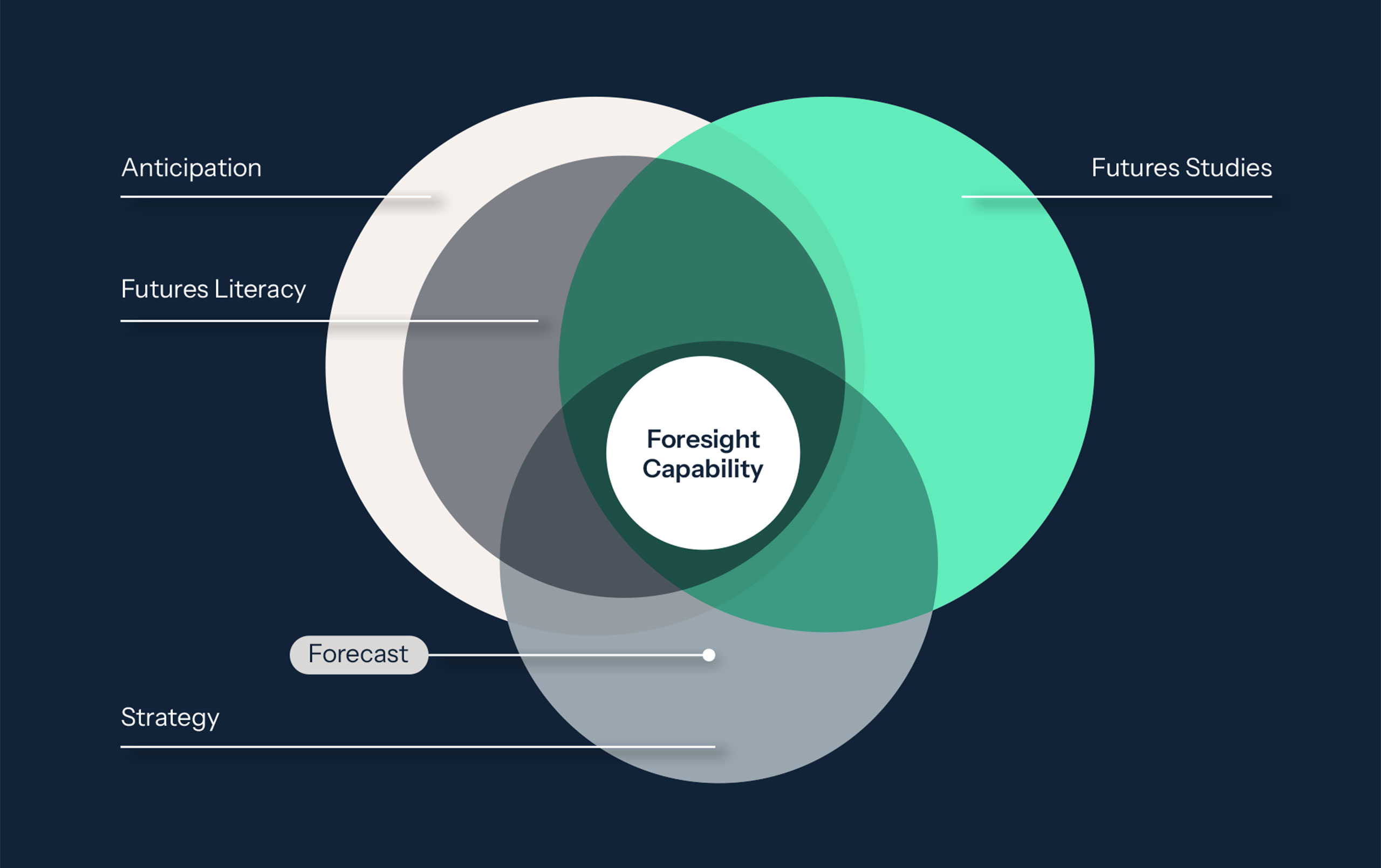
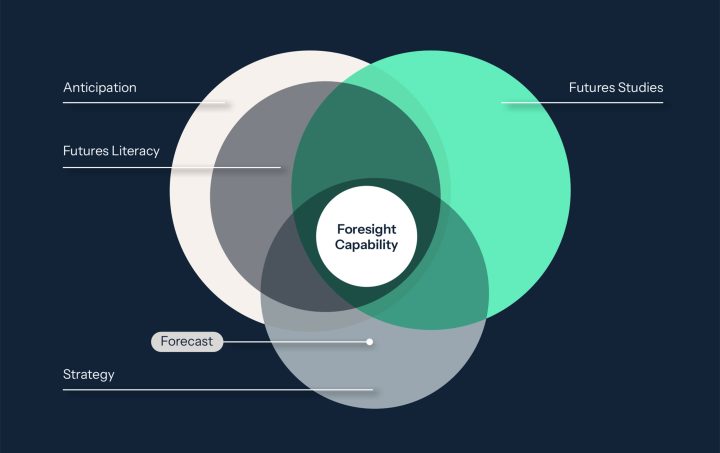
Foresight Capability Foresight Capability
Source: Gabriele Rizzo @2025 Longviews

Our role in the field

Futures studies encompasses diverse methods, disciplines, intellectual traditions and cultural perspectives. WFSF provides the global institutional framework through which these different contributions can be connected, tested and developed as part of a coherent field.

We do not prescribe one future, nor do we privilege one methodology or school of thought. But pluralism is not relativism. Scientific quality in futures studies requires explicit assumptions, transparent methods and models, critical examination of evidence, comparison of alternatives and conclusions that remain open to challenge.

WFSF’s authority therefore does not rest on intellectual uniformity. It rests on our ability to uphold standards, connect knowledge and protect freedom of inquiry across a diverse global field.

Globe Globe

Images of the future are social facts: they reveal people’s values, expectations and perceived capacity to shape their own lives”

Andrzej Siciński

What WFSF does

Establish standards and accreditation

WFSF promotes academic and professional quality in futures studies

Through the WFSF Accreditation Council, futures studies programmes and courses, foresight scholars and practitioners, and institutional foresight units and teams are assessed against transparent standards of academic and professional quality, methodological robustness, conceptual clarity and practical applicability.

Accreditation makes quality visible while respecting legitimate differences among methods, intellectual traditions and regional contexts.

Connect knowledge

Futures studies encompasses different methods, disciplines, intellectual traditions and cultural perspectives. WFSF connects these bodies of knowledge and helps the field build greater coherence and cumulative understanding – without imposing one methodology or school of thought.

Build a global community

We bring together established scholars and practitioners with educators, students and emerging generations. Across regions, cultures and disciplines, WFSF creates opportunities for exchange, collaboration and the further development of the field.

What we stand for

Scientific integrity, pluralism with standards, independence and freedom of inquiry, and responsibility towards shared humanity guide WFSF’s work. We protect methodological and cultural diversity while insisting that futures studies remain transparent, contestable and open to critical scrutiny.

What we stand for

A federation with a history - and a future

A federation with a history

WFSF grew out of the international development of futures studies during the late 1960s and early 1970s and was formally established in Paris in 1973.

Since then, the Federation has contributed to the internationalisation of futures studies, the development of its intellectual traditions and the creation of connections among scholars, educators and practitioners around the world.

Today, WFSF builds on this heritage without treating the ideas and structures of the past as untouchable. Our task is to carry their spirit forward: strengthening scientific and professional standards, expanding global participation, supporting new generations and developing the forms of collaboration that futures studies now requires.

Explore our history & archive

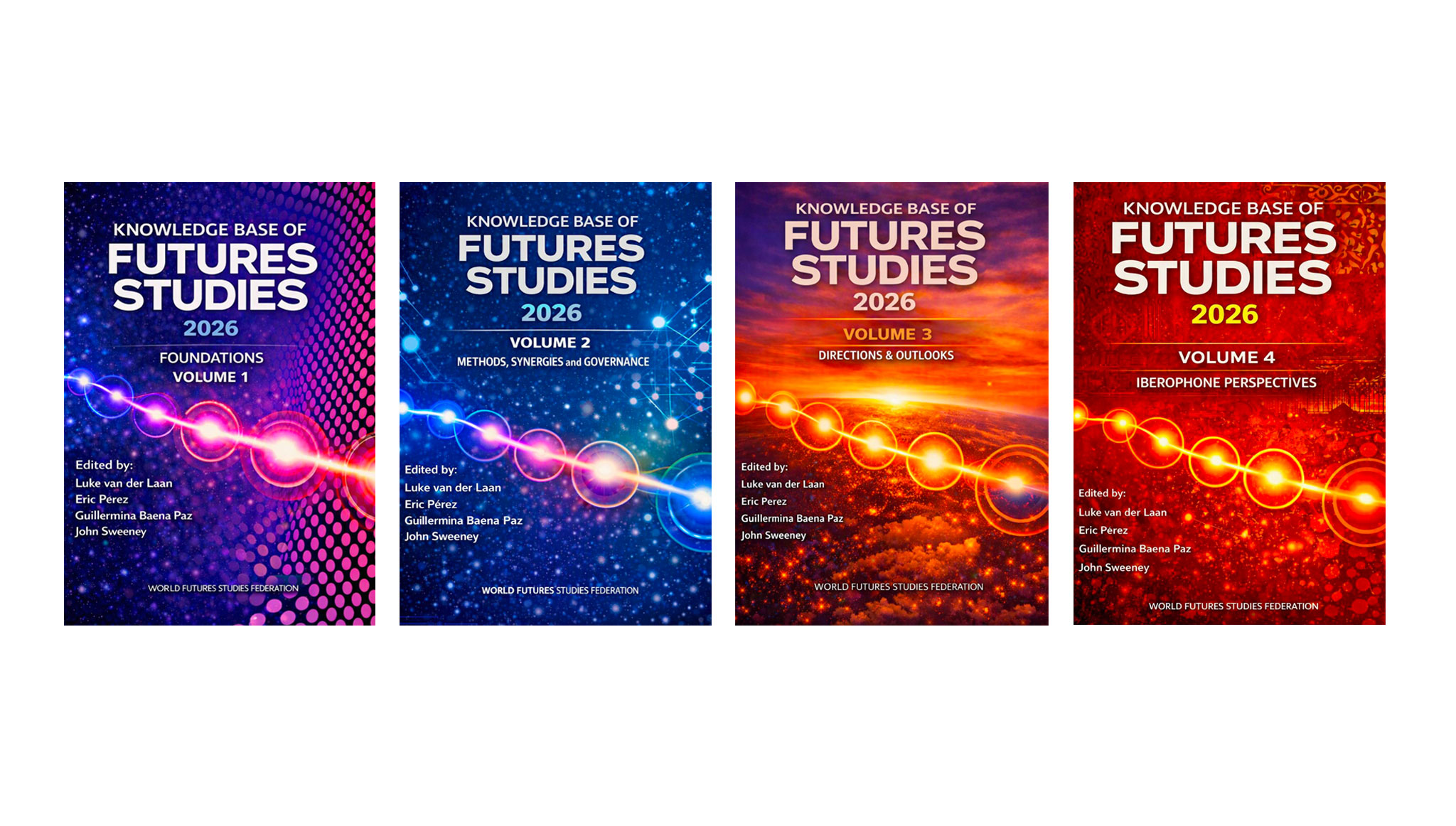
Knowledge Base of Futures Studies 2026

The Federation is delighted to announce the publication of the Knowledge Base of Futures Studies 2026, a landmark international resource bringing together decades of knowledge, research and thinking about the future. Available free of charge to readers worldwide, the new edition features approximately 250,000 words from some 45 contributors representing a diverse range of countries, disciplines and perspectives.

First published in 1993, the KBFS has become an important reference point for the global futures community, supporting academics, researchers, policymakers, business leaders, students and professional futurists seeking to understand, anticipate and shape alternative futures. Its publication comes at a particularly significant moment. Against a backdrop of geopolitical instability, tech disruption, environmental pressures and profound societal change, the need for rigorous, inclusive and internationally informed futures thinking has rarely been greater.

A defining development for the 2026 edition is the appointment of the Federation as curator of the KBFS, with responsibility for safeguarding its intellectual legacy and overseeing future editions.

This important transition has been made possible through the generosity of Professor Richard Slaughter, whose pioneering contribution to the development of the KBFS has helped establish it as an enduring resource for the field.

The 2026 edition combines respect for the discipline’s intellectual foundations with an appreciation of the diverse perspectives that are continually reshaping its development. It is both a celebration of the history of futures studies and an investment in its future.

The Federation acknowledges the generous support of Prince Mohammad Bin Fahd University, whose contribution has helped make the publication of the 2026 edition possible.

KBFS26 Volume 1 – Foundations
KBFS26 Volume 2 – Methods, Synergies & Governance
KBFS26 Volume 3 – Directions & Outlooks
KBFS26 Volume 4 – Iberophone Perspectives

Future Studies Future Studies

Explore WFSF

Mission and purpose

Learn more about WFSF’s constitutional mission, its values and its role in advancing futures studies worldwide.

Our mission and purpose

History and archive

Discover the people, ideas and international developments that led to the establishment and evolution of the Federation.

Our history and archive

Governance and organisational structure

Learn how WFSF is governed and meet the members of its Executive Board and organisational bodies.

Governance and organisational structure

UNESCO and UN partnerships

Explore WFSF’s relationships with UNESCO and the United Nations system and their contribution to the international development of futures studies.

UNESCO and UN partnerships

Accreditation Council

This is a specialised panel of futures experts that evaluates and grants five-year international accreditation to higher education institutions, degree programmes, and training courses in futures studies.

Accreditation Council

Councils, committees and working bodies

The WFSF operates as operates as a decentralised global NGO governed by an elected President, an Executive Board, and an appointed Secretariat, supported by specialised councils, committees, and regional chapters.

Councils, committees and working bodies