History & Archive

From an international movement to a global federation

The World Futures Studies Federation was founded in Paris in 1973. Its origins reach back to an international movement that emerged during the 1960s, when scholars, peace researchers, educators and practitioners sought to establish futures studies as a global field.

From the beginning, WFSF stood for more than forecasting. Its pioneers wanted to examine alternatives to prevailing trajectories, challenge assumptions about supposedly inevitable futures and open the field to different cultures, disciplines and intellectual traditions. Cultural pluralism and critical inquiry were therefore not later additions to WFSF’s identity; they formed part of its foundations.

Since 1987

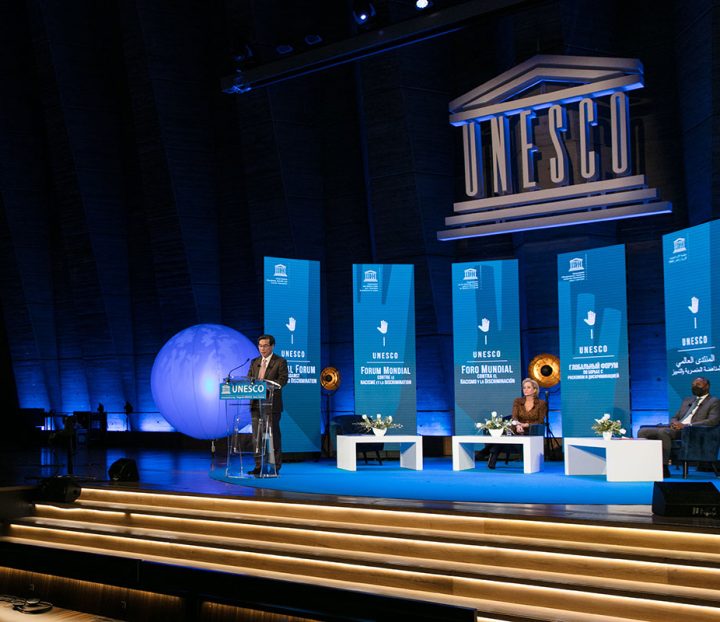
The federation has been a Special Consultative Partner with the United Nations Economic and Social Council (ECOSOC) and UNESCO since 1987.

UNESCO and UN Partnerships

Unesco

The path to WFSF

1967

Oslo — Mankind 2000

The first International Futures Research Conference was held in Oslo in September 1967.

The conference was coordinated by Mankind 2000 in collaboration with the Peace Research Institute Oslo and the Institut für Zukunftsfragen in Vienna. Robert Jungk, Johan Galtung and James Wellesley-Wesley
were among the central figures behind the meeting.

The participants shared an interest in futures research that extended beyond technological forecasting. They sought to investigate long-term human development and create international connections among people working on questions of the future.

1970

Kyoto — towards a permanent organisation

A second international conference followed in Kyoto in April 1970, organised in cooperation with the Japanese Society for Future Studies under the leadership of Yujiro Hayashi and Hidetoshi Kato.

The meeting marked an important step towards institutionalisation. The Continuing Committee established after Oslo was asked to prepare a permanent worldwide organisation and develop a draft charter for consideration at the next World Futures Conference.

1972

Bucharest — the decision to establish WFSF

At the third World Futures Conference in Bucharest in September 1972, participants agreed to establish the World Futures Studies Federation.

The meeting was hosted by Pavel Apostol with Mircea Malița and brought together participants from different countries and intellectual traditions, including Eleonora Barbieri Masini, Jim Dator, Bogdan Suchodolski and Anthony Judge.

1973

Paris — the Federation is founded

The founding meeting of WFSF took place in Paris on 26 May 1973. The charter was ratified, the Federation was registered in France, and its headquarters were established at the Maison Internationale Futuribles. Bertrand de Jouvenel became WFSF’s Founding President.

These founders represented different countries, professions and institutional traditions. Their shared ambition was to create an organisation capable of advancing futures studies internationally without reducing the field to one national perspective or methodological school.

Paris — the Federation is founded

The founding members present at the meeting were:

  • Serge Antoine
  • Pavel Apostol
  • André-Clément Decouflé
  • Paul Hannape
  • Bertrand de Jouvenel
  • Eleonora Barbieri Masini
  • Peter Menke-Glückert
  • Pierre Piganiol
  • Andrzej Siciński

1974

The first General Assembly

WFSF held its first General Assembly in Paris in March 1974 with assistance from UNESCO.

Johan Galtung became the Federation’s first elected President, Pavel Apostol its Vice-President and Peter Menke-Glückert its Secretary-General. The General Assembly completed WFSF’s transition from a founding initiative into a member-led international federation.

Global by design

Global by design

WFSF was never intended to represent one country, region or school of thought. The sequence of meetings in Oslo, Kyoto, Bucharest and Paris already reflected the Federation’s international character.

During the following five decades, WFSF held World Conferences across Europe, Africa, Asia, the Americas and Oceania. Their themes addressed questions including peace, development, cultural identity, democracy, poverty, globalisation, technological change and responsibility towards future generations.

This global orientation is more than geographical. It rests on the recognition that futures are understood differently across cultures and societies. No single region or tradition can define the futures of humanity, and no credible global field can develop without exchange among different forms of knowledge and experience.
Educating new generations

Educating new generations

Education has been central to WFSF’s history.

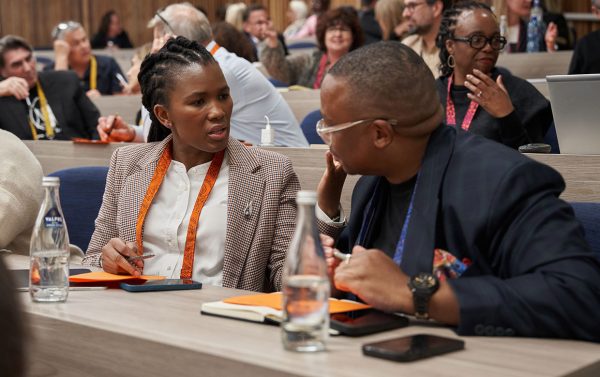
Since 1975, the Federation has offered futures studies courses and workshops for younger generations in different parts of the world. These activities have taken place across Europe, Asia, Africa, North America and Australia, often in cooperation with universities, research institutions and UNESCO.

Through these programmes, WFSF helped introduce students and emerging scholars to the concepts and methods of futures studies. It also contributed to the development of international teaching networks and university programmes in the field.

This commitment remains fundamental to WFSF’s purpose: a field can endure only when knowledge, responsibility and opportunities to contribute are passed from one generation to the next.

Building the institutions of the field

Throughout its history, WFSF has combined intellectual exchange with institution-building.

The Federation has convened conferences and General Assemblies, supported educational programmes, developed publications and international partnerships, and connected futures scholars and practitioners across regions and disciplines.

More recently, accreditation has become a central expression of this institutional role. Through shared standards and independent assessment, WFSF is strengthening the quality and credibility of futures studies education, scholarship and professional practice.

WFSF’s history is therefore not only a history of ideas. It is also a history of the institutions, relationships and standards through which futures studies has developed as a global field.

Pioneers and Hall of Fame

The WFSF Hall of Fame honours people whose scholarship, teaching, institution-building and service helped establish the Federation and advance futures studies worldwide.

Its pioneers include founders, early conference organisers, honorary members and later leaders who strengthened the intellectual and international development of the field.

Their contributions differed widely. Some developed intellectual and methodological foundations; others created institutions, organised international conferences, advanced futures education or sustained the Federation across generations and world regions. Together, they helped transform futures studies from a dispersed set of initiatives into an internationally connected field.

  • Serge Antoine
  • Igor Bestuzhev-Lada
  • Jim Dator
  • Johan Galtung
  • Samir Ghabbour
  • Bertrand de Jouvenel
  • Anthony Judge
  • Robert Jungk
  • Hidetoshi Kato
  • John McHale
  • Magda Cordell McHale
  • Mircea Malița
  • Eleonora Barbieri Masini
  • Peter Menke-Glückert
  • Bogdan Suchodolski
  • James Wellesley-Wesley

A living heritage

A living heritage

WFSF’s history is a source of identity and authority. It is not an instruction to preserve every inherited idea or organisational form.

The Federation honours its pioneers by continuing the work they began: protecting freedom of inquiry, strengthening the scientific and professional foundations of futures studies, widening global participation and creating opportunities for new generations.

Standing on their shoulders does not mean repeating answers developed five decades ago. It means carrying their intellectual courage, internationalism and willingness to challenge prevailing assumptions into the questions of the present.

Explore the WFSF archive

Explore the WFSF archive

The WFSF archive preserves conference records, publications, newsletters, photographs, institutional documents and personal reflections from more than five decades of the Federation’s history.

It provides researchers, members and interested readers with access to the people, debates and activities that shaped WFSF and contributed to the wider development of futures studies.

Explore the archive