Sean Pillot de Chenecey, UK
Sean Pillot de Chenecey is a foresight/strategy/innovation consultant, founder of Brand Positive, and UK Assoc Partner with the Copenhagen Institute for Futures Studies.
WORLD FUTURES STUDIES FEDERATION
INDEPENDENT GLOBAL PEAK BODY FOR FUTURES STUDIES SCHOLARSHIP A UNESCO PARTNER – FOUNDED PARIS 1973
Abstract The World Futures Studies Federation (WFSF), founded in 1973, has been the leading international body for futures research and foresight scholarship for over five decades. This article offers an in-depth account of the Federation’s achievements and innovations from 2017 to 2025, a period marked by renewal, expansion, and global engagement. During this era, WFSF celebrated its 50th anniversary, deepened collaboration with UNESCO and the United Nations, launched program and course accreditation services for foresight education, expanded regional chapters, and strengthened its role as a global convener of academic and applied futures communities. The article situates WFSF’s work in the wider history of futures studies, highlights its unique pluralistic ethos, and examines how the Federation has advanced foresight education, and global policy engagement. It concludes by outlining the Federation’s enduring contributions to shaping the futures studies and its prospective trajectory as humanity faces unprecedented challenges. Introduction Since its foundation in Paris in 1973, the World Futures Studies Federation (WFSF) has sought to advance futures studies as an academic discipline and a global practice. Distinct from its contemporaries, WFSF was established on the principles of cultural pluralism, interdisciplinarity, and planetary responsibility. It has consistently emphasized alternative, inclusive, and emancipatory futures, encouraging systemic awareness and collective anticipation. The period between 2017 and 2025 has been particularly dynamic in the Federation’s history. Under the leadership of President Erik F. Øverland, WFSF embarked on strategic programs that consolidated its academic credibility, extended its institutional partnerships, and renewed its role in addressing global challenges. These …
Sean Pillot de Chenecey, UK
Sean Pillot de Chenecey is a foresight/strategy/innovation consultant, founder of Brand Positive, and UK Assoc Partner with the Copenhagen Institute for Futures Studies.
Future Industries and Innovation Ecosystem: Voice of Global Think Tanks Beijing, China – March 28, 2025: The 2025 Global Science and Technology Innovation High Level Think Tank Forum was held at the Zhongguancun International Innovation Center, China’s “Silicon Valley”. With the theme of “Future Industries and Innovation Ecosystem: Voice of Global Think Tanks”, the Think Tank Forum invited 4 domestic and foreign academicians, 1 ambassador to China, 3 representatives of international organizations, 95 domestic and foreign think tanks, and more than 500 people from more than 50 countries and regions to participate in the event. Erik F. Øverland, President of the World Futures Studies Federation, pointed out that the pace of scientific and technological innovation is becoming increasingly rapid, and the wave of technological change is sweeping the world with unprecedented force. He called for cooperation to build a better future with leading technology, social equity, environmental friendliness, and cultural prosperity. Download: Letter of Appreciation to the World Futures Studies Federation: Download: Letter of Appreciation to the President of the World Futures Studies Federation: WFSF President holds meeting with senior officials of China Society for Futures Studies Beijing, China – March 29, 2025. Secretary-General of China Society for Futures Studies, Chen Hui introduced the development history, membership structure and organizational activities of China Society for Futures Studies. The Society actively participates in international conferences, such as the 25th World Conference of the World Futures Studies Federation (WFSF). In the meeting the fragmentation and lack of systematization of futures studies, among other topics, …
Dear WFSF Members and Friends, Your donation is very much appreciated.Be sure to identify the payment with your name.To pay by wire transfer, use the following bank account details: Bank name: Den Danske BankBank account : WFSF – Main AccountIBAN number – NO5984502011765Account number – 8450.20.11765Bank Identifier (SWIFT) code – DABANO22 Bank Address:Bryggetorget 4N-0250 OsloNorway To pay by cheque please make your cheque favouring “World Futures Studies Federation WFSF.” and post to: Dr. Erik F. Øverland, WFSF c/oGlaneren 2N-1458 FjellstrandNorway Cheque payments are preferred in NOK to avoid heavy currency conversion and bank charges.
This is a self-paced course about the environmental challenges we face and what we can do about them.
In brief, the course includes 12 lessons across three themes:
Each theme has two lessons addressing the challenges, and two lessons addressing the alternatives.
Reflections on the New Core Work of the 21st Century
Preface
Introduction
Section I: Where are we who are MTI in History
Section II: Two Useful Mental Models
Section III: Using these Two Mental Models to Explore the Question:
“Where are we who are MTI in history?”
Section IV: But what if we are wrong?
Section V: The Adventure of the Exodus that Awaits Us
From 8 to 12 December 2020, the UNESCO High-Level Futures Literacy Summit provided testimonials from around the world that being futures literate changes what people see and do. From high ranking leaders in the public and private sector to activists, artists, students and professors, the Summit showed how people become futures literate and the impact it has on all aspects of life (click here to read more). Dr. Riel Miller, Head of Futures Literacy in UNESCO and Executive Board member of the WFSF organized the Summit. The WFSF was very active in the UNESCO Futures Literacy Summit 2020 and organized several exciting events. You can access on this page the content presented in the WFSF Virtual Booth at this Summit as well as the video recordings of the presentations. In 2023 WFSF Turns 50 Program Guide We Are WFSF Partnership & Research Academia Publications Recorded Videos Disclaimer: The views and opinions expressed in these presentations are those of speakers and do not necessarily reflect the official policy or position of the Federation. Maya Van Leemput: Applied Futures Research for professional Bachelors at Erasmus University of Applied Sciences and the Arts Brussel You can watch the video of the presentation here. Christopher Bisson with Erik Øverland, Caroline Codsi, ICD.D. and Bertrand Badré: A Roadmap for Sustainable Governance (Panel discussion) You can watch the video of the presentation here. Jennifer Gidley, PhD: The WFSF and Futures Literacy You can watch the video of the presentation here. Dana Klisanin, PhD: Transforming …
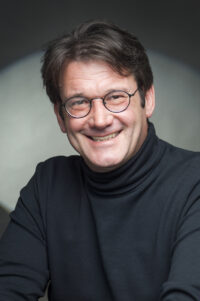
Luke is an influential and internationally recognised leadership and strategy thinkers. He has worked with leading companies and large public entities across the Asia Pacific region. Van der Laan is a doctoral research Programme Director at the University of Southern Queensland.